Perspective Intelligence Training
Developing Adaptive Human Awareness in Complex Environments
What is it?
Perspective Intelligence is a practical workshop and training framework designed to help individuals and organizations strengthen emotional intelligence, communication, adaptive thinking, relational awareness, and reflective capacity in modern professional environments.
The framework integrates principles from emotional intelligence research, developmental psychology, systems thinking, coaching, and experiential learning to help participants move beyond reactive, rigid, and self-limiting patterns of perception and behavior.
Participants develop practical skills to:
regulate emotional responses under pressure
think from multiple perspectives
communicate more effectively
process experience into insight and learning
understand systemic consequences and dynamics
build healthier interpersonal and organizational relationships
The program combines conceptual learning with practical exercises, guided reflection, interpersonal dialogue, and experiential integration designed for real-world professional application.
Who It Is For:
Perspective Intelligence is designed for:
organizations and leadership teams
executives and managers
HR and people development departments
startups and innovation-driven environments
wellness, culture, and leadership initiatives
professionals working in high-pressure, fast-changing, or relationally complex environments
The Seven Series Training in more detail:
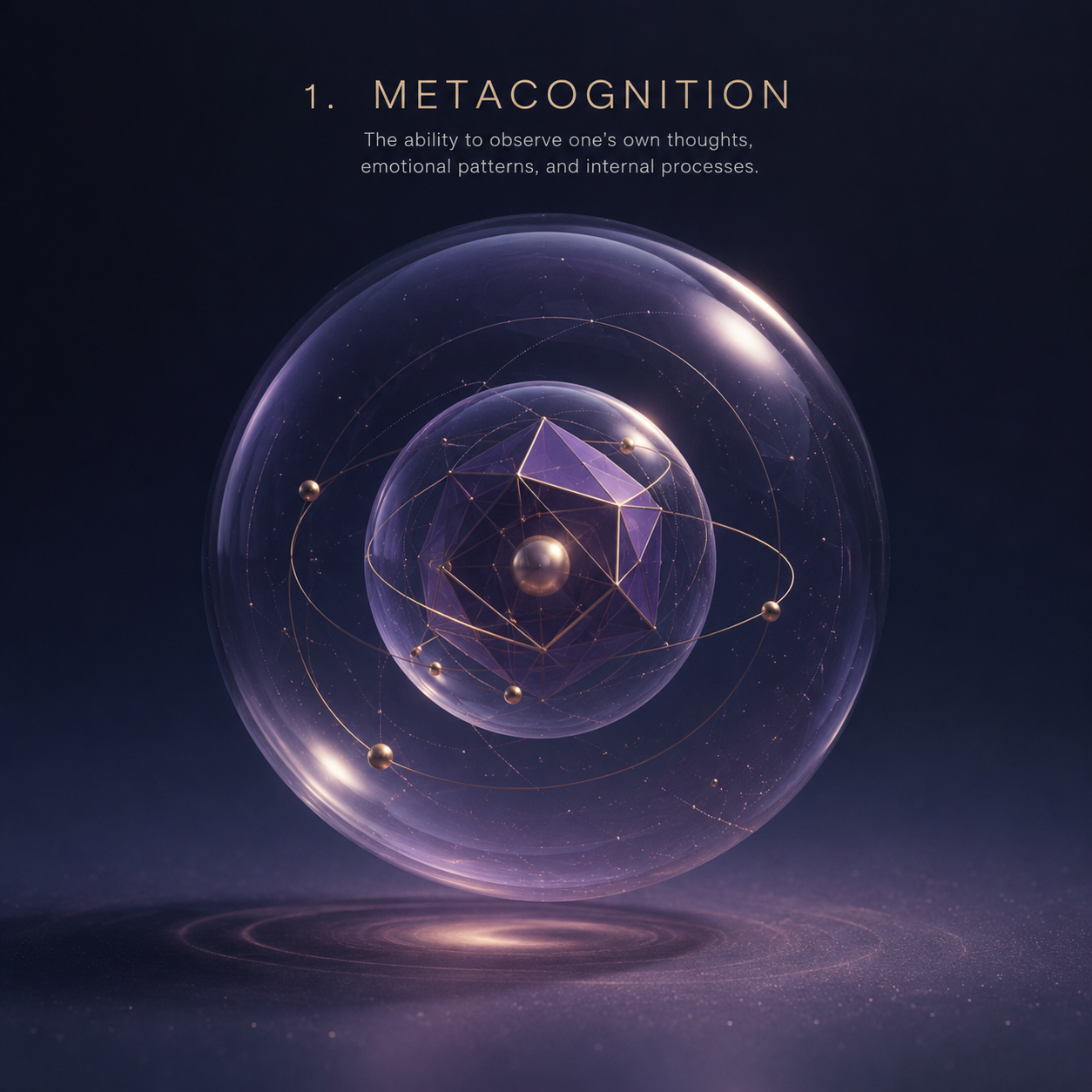
1. Metacognition
The ability to observe one’s own thoughts, emotional patterns, assumptions, and internal processes rather than becoming unconsciously absorbed or identified with them.
Participants learn how greater self-awareness can reduce reactivity, improve communication, strengthen decision-making, and create more intentional responses under pressure.
This module introduces practices designed to help individuals step outside automatic thinking patterns and develop broader reflective awareness.
Practice
Participants engage in reflective observation exercises, internal narrative recognition, and meta-position practices inspired by Neuro-Linguistic Programming (NLP), along with paired dialogue exercises designed to help participants observe situations and reactions from multiple perspectives.
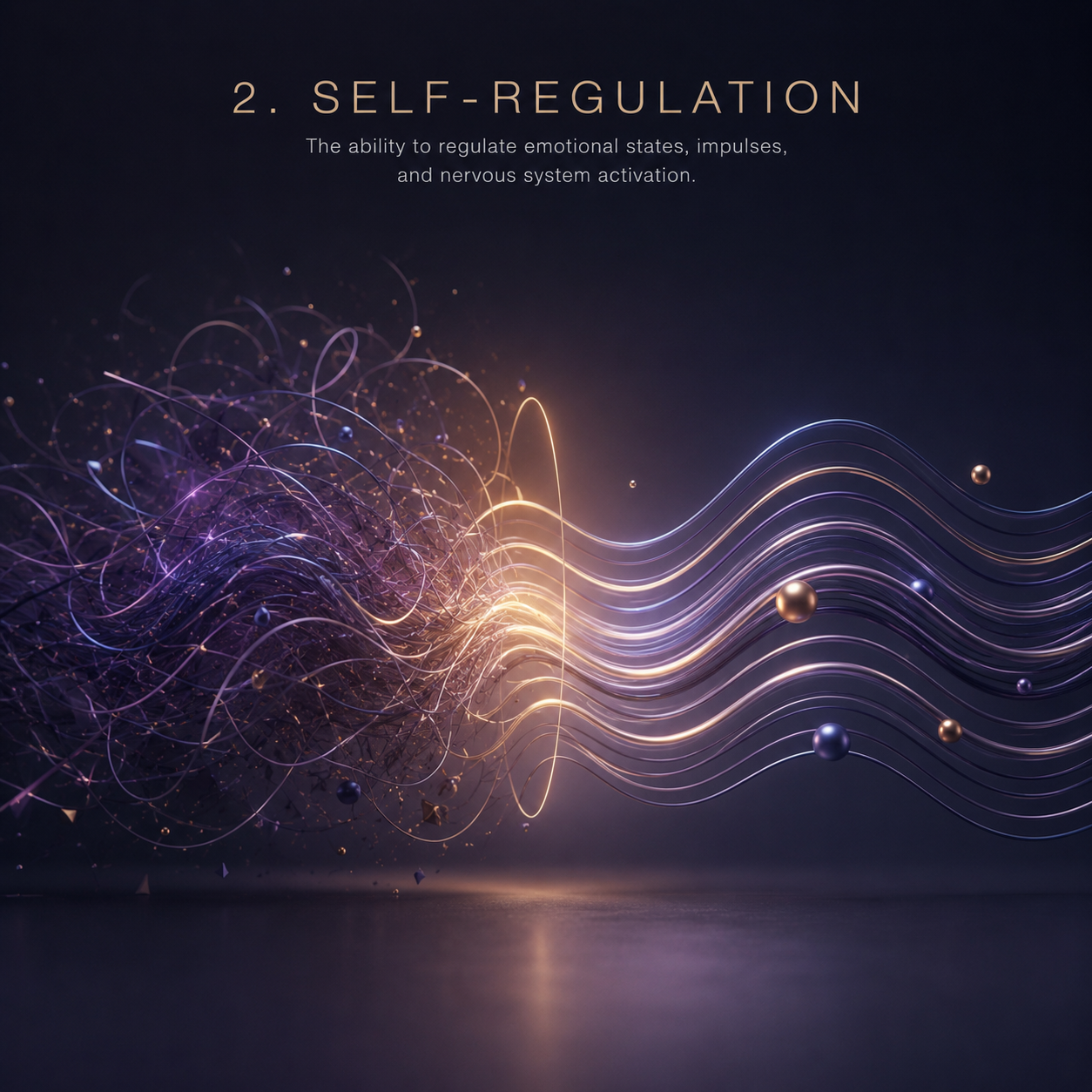
2. Self-Regulation
Participants are introduced to a practical 4-step emotional regulation technique designed to help recognize and interrupt reactive emotional states under pressure.
The workshop explores the neuroscience behind stress activation, including the fight-or-flight response, emotional triggering, and the body’s relaxation response. Participants learn how attention, breath, perception, and nervous system regulation influence communication, decision-making, and emotional resilience in professional environments.
Influenced by mindfulness practices and the conflict transformation work of Diane Musho Hamilton, this module combines conceptual understanding with practical application.
Practice
Participants engage in guided emotional regulation exercises, reflective awareness practices, and future pacing through self-hypnosis to help reinforce the 4-step regulation technique and support real-world application under stress.
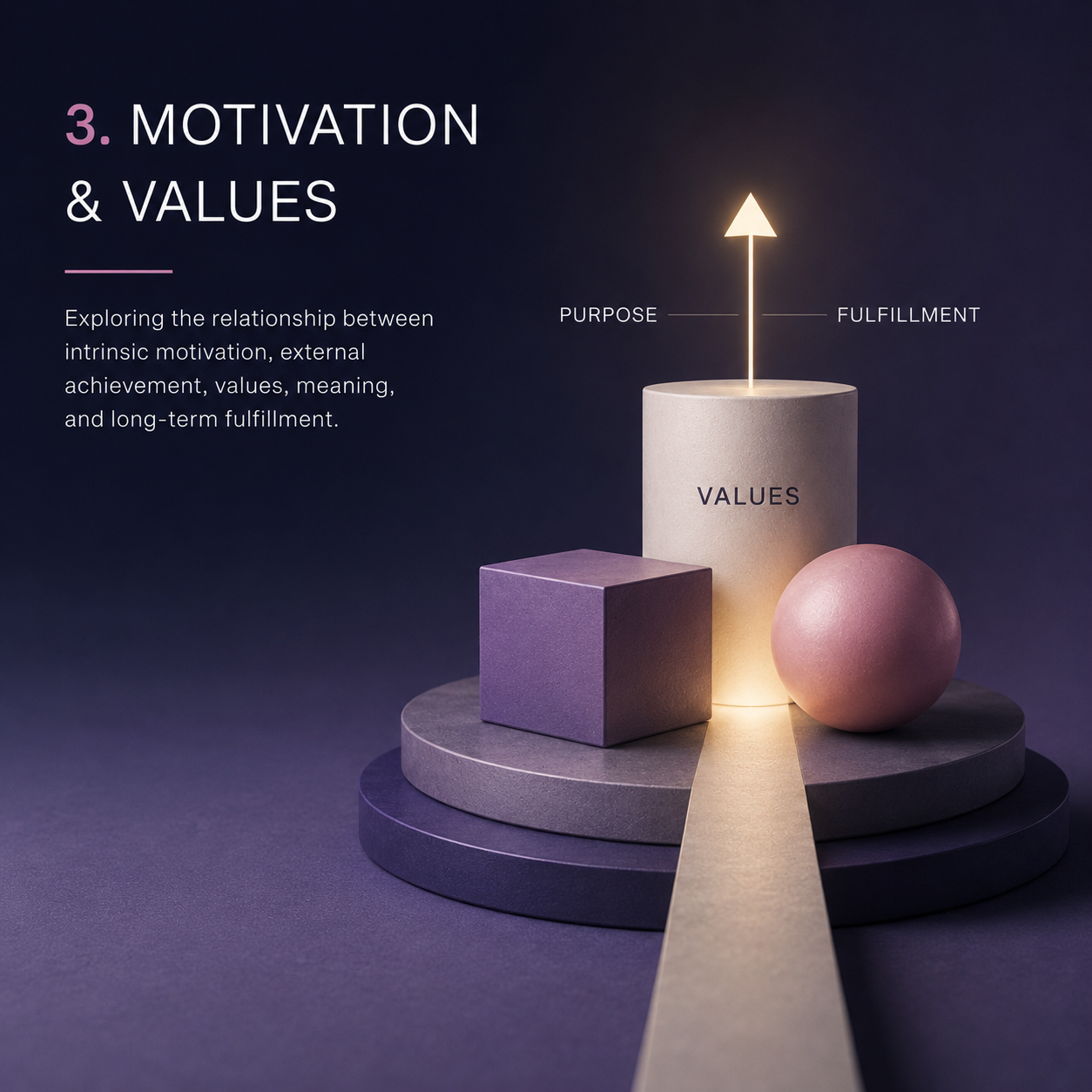
3. Motivation & Values
Exploring the relationship between intrinsic motivation, external achievement, values, meaning, and long-term fulfillment.
Influenced by developmental psychology, Spiral Dynamics, and human motivation frameworks, this module examines how individuals organize priorities, define success, and derive meaning from work, relationships, and achievement.
Participants explore the difference between externally driven performance and internally aligned motivation, including how unconscious compensation patterns, social conditioning, and identity structures can influence behavior and decision-making.
Practice
Through guided values mapping and future alignment exercises, participants explore what currently drives their behavior, where motivation becomes depleted, which values create energy and meaning, and what kind of future self, work, or contribution they are ultimately moving toward.
4. Multi-Perspective Thinking
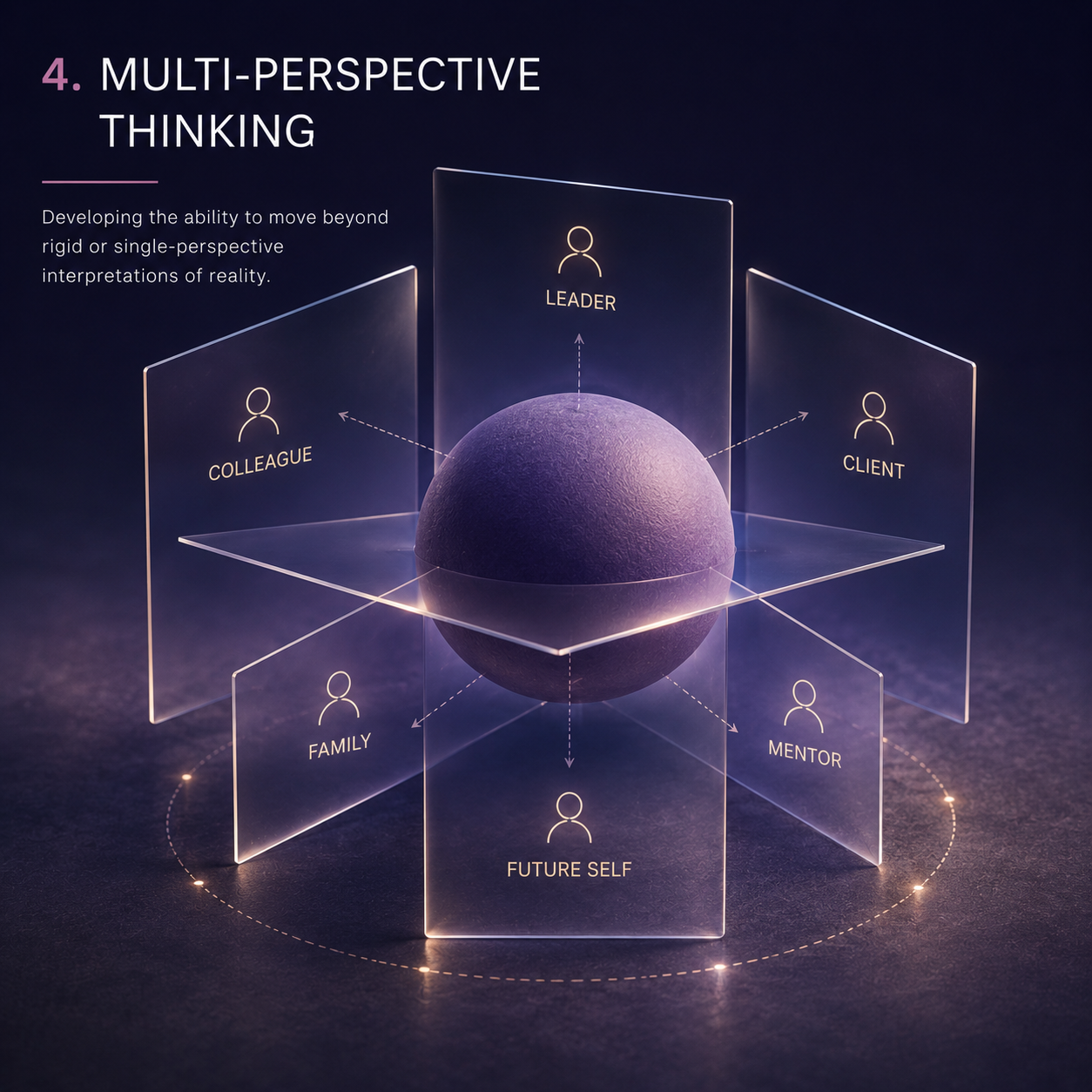
Developing the ability to move beyond rigid or single-perspective interpretations of reality.
Influenced by developmental psychology, systems thinking, and the adult development work of Robert Kegan, this module helps participants strengthen cognitive flexibility, reduce reactive thinking, and better navigate complexity, conflict, and interpersonal dynamics.
Practice
Participants engage in guided perspective-taking exercises, role-based inquiry practices, and reflective visualization techniques designed to help them observe situations through the perspective of colleagues, clients, leadership, family members, or other stakeholders.
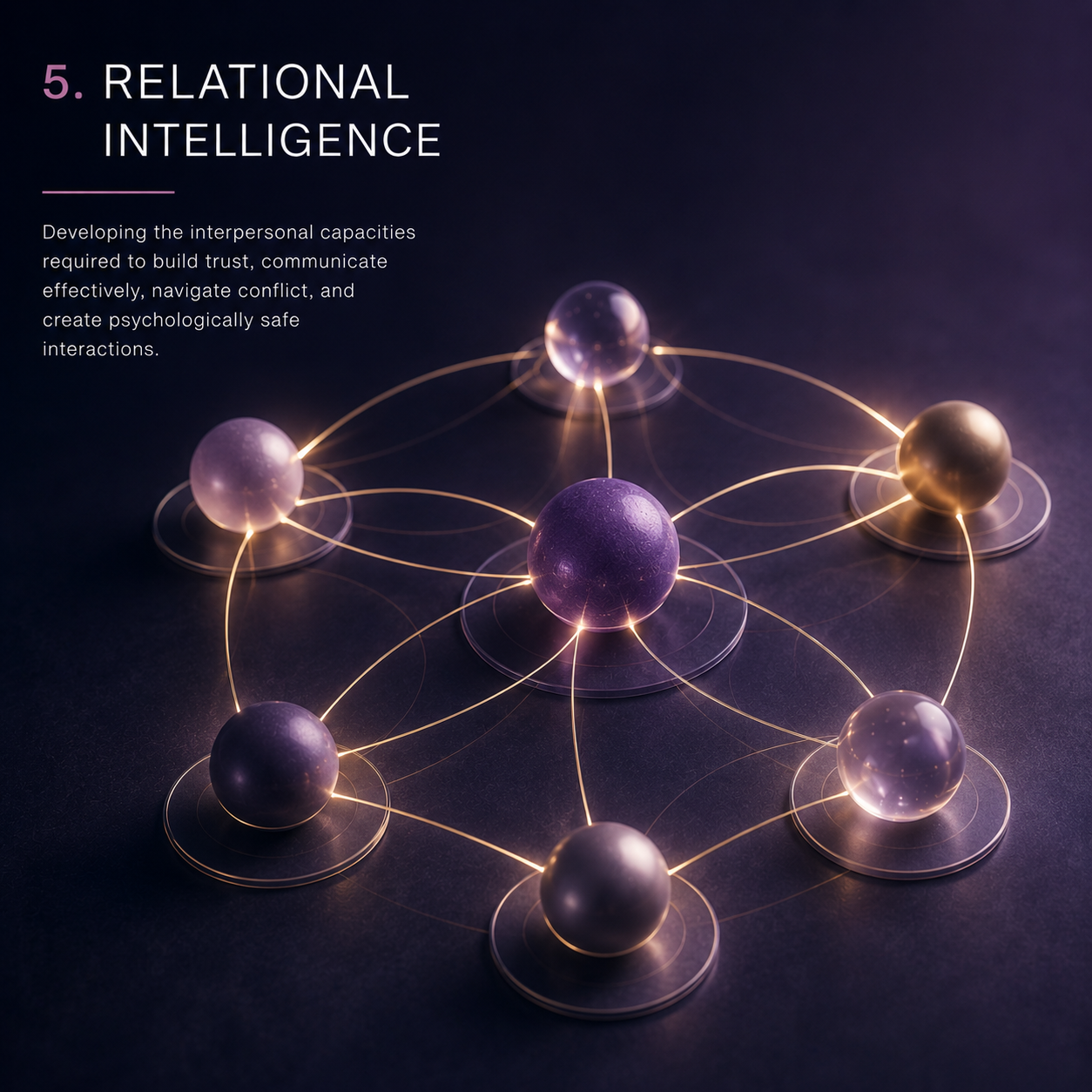
5. Relational Intelligence
Developing the interpersonal capacities required to build trust, communicate effectively, navigate conflict, and create psychologically safe professional interactions.
This module explores how communication patterns, emotional regulation, listening, and perspective-taking influence collaboration, leadership, feedback, and team dynamics within organizational environments.
Practice
Participants engage in active listening exercises, rapport-building techniques, nonjudgmental communication practices, pacing and leading exercises, and structured interpersonal feedback designed to strengthen relational awareness, clarity, and communication under pressure.
6. Reflective Intelligence
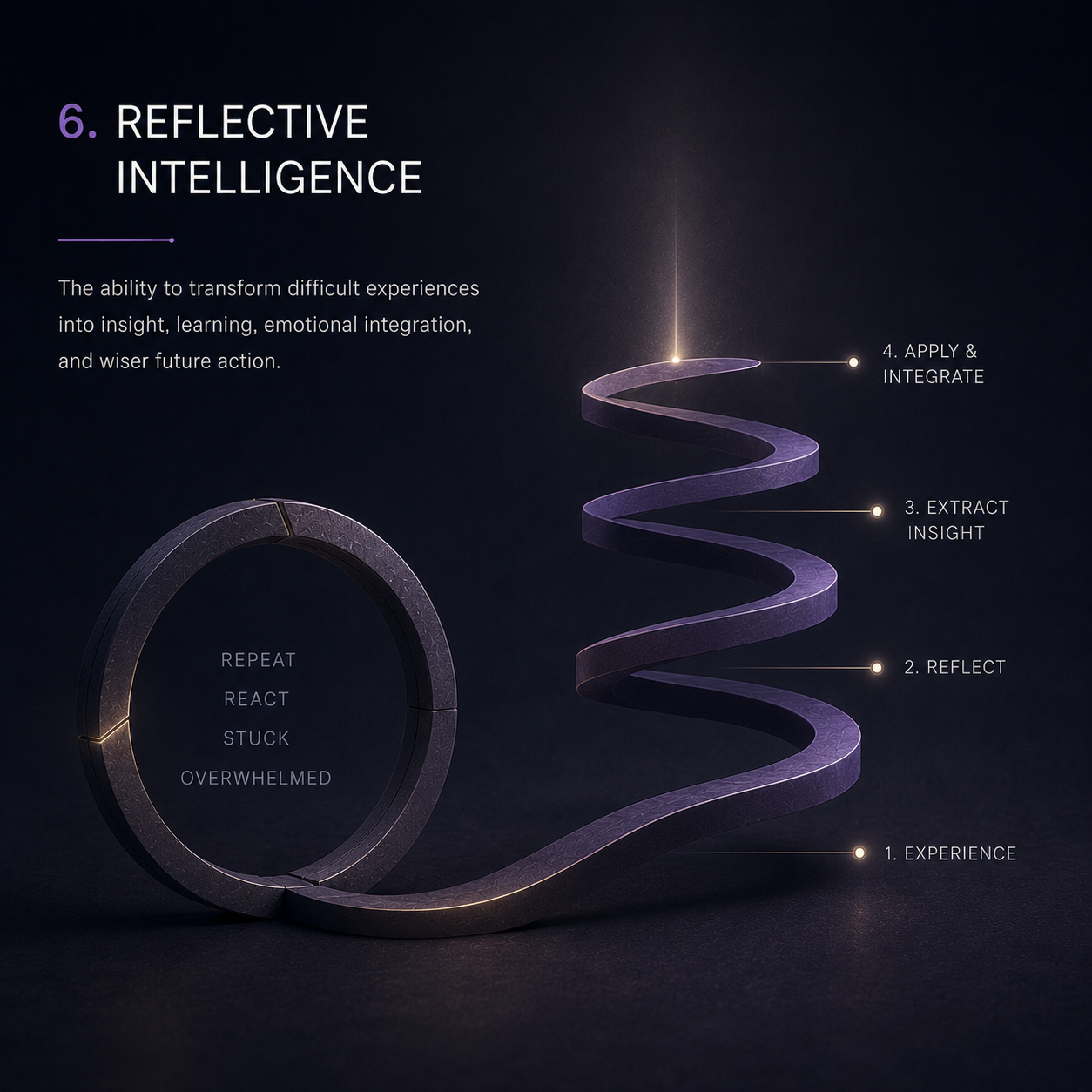
The ability to transform difficult experiences into insight, learning, emotional integration, and wiser future action.
Inspired by David Kolb’s experiential learning model and Elena Mosaner’s Exit the Loop™ framework, this module helps participants recognize recurring emotional and behavioral patterns, extract meaningful insight from experience, and apply those insights more intentionally moving forward.
The Exit the Loop™ Process
Identify the experience or recurring pattern
Reflect on the emotional and behavioral dynamics involved
Extract the lesson or insight
Apply the insight through a healthier response or behavioral shift
Organizations interested in exploring this framework further may also inquire about the dedicated Exit the Loop™ workshop experience.
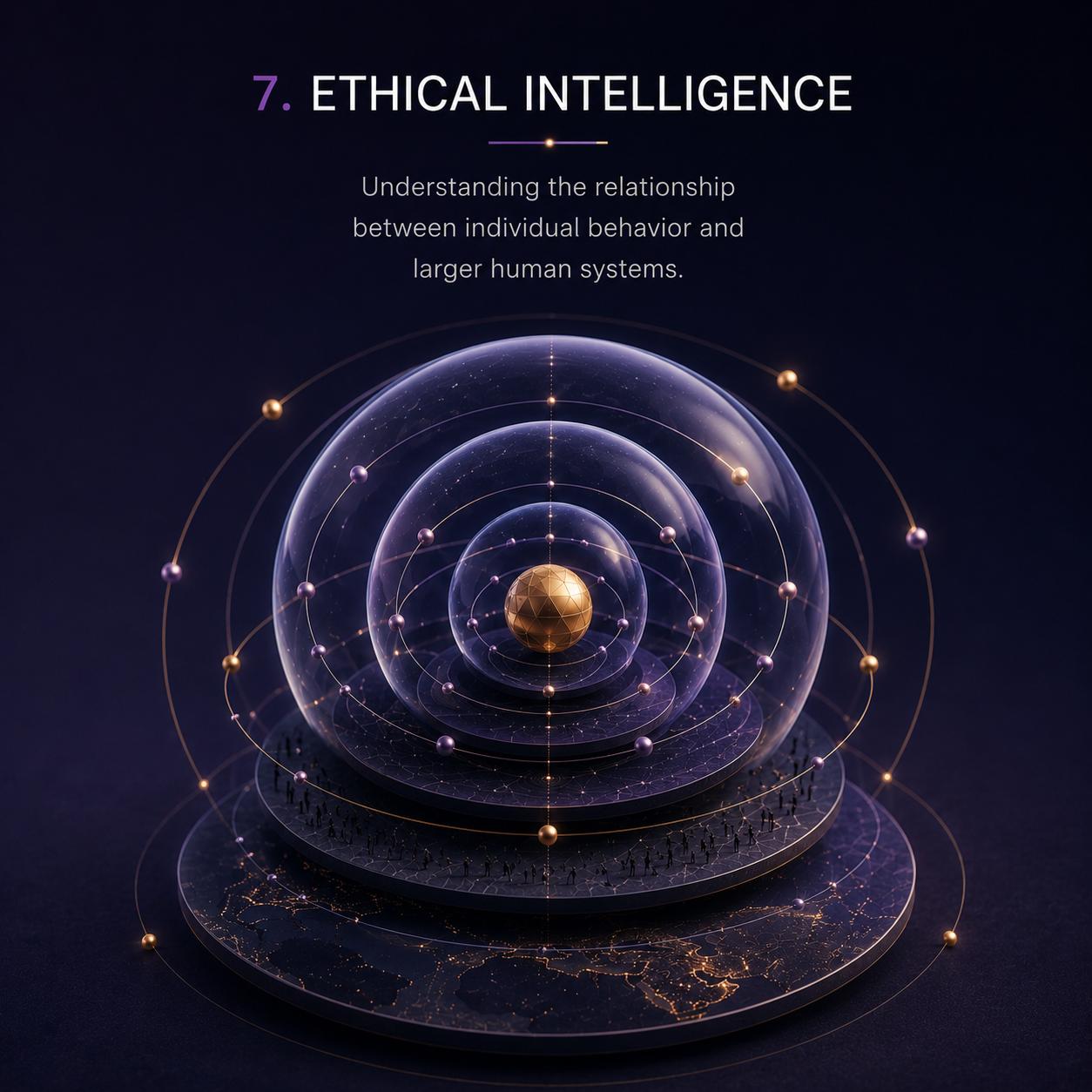
7. Ethical Intelligence
Understanding the relationship between individual behavior and larger human systems.
Influenced by systems theory and the work of Donella Meadows, Gregory Bateson, and Jay Forrester, this module helps participants develop greater awareness of how behaviors, communication patterns, incentives, and emotional dynamics influence teams, organizations, and broader social systems.
Practice
Participants engage in reflective systems exercises designed to help them temporarily step outside their individual role and observe the organization, team, or relational environment from a broader systems perspective. The practice strengthens systems awareness, ethical reflection, communication, long-term thinking, and the ability to recognize patterns that either strengthen or weaken organizational trust, cohesion, and sustainability.
Bring Perspective Intelligence to Your Organization
For workshop inquiries, team sessions, conferences, or speaking engagements, please complete the form and we’ll be in touch.
Based in Europe & the United States
Tel: +1 646 450 8167